

Hip Position in Motocross: The Difference Between Reactive and In Control
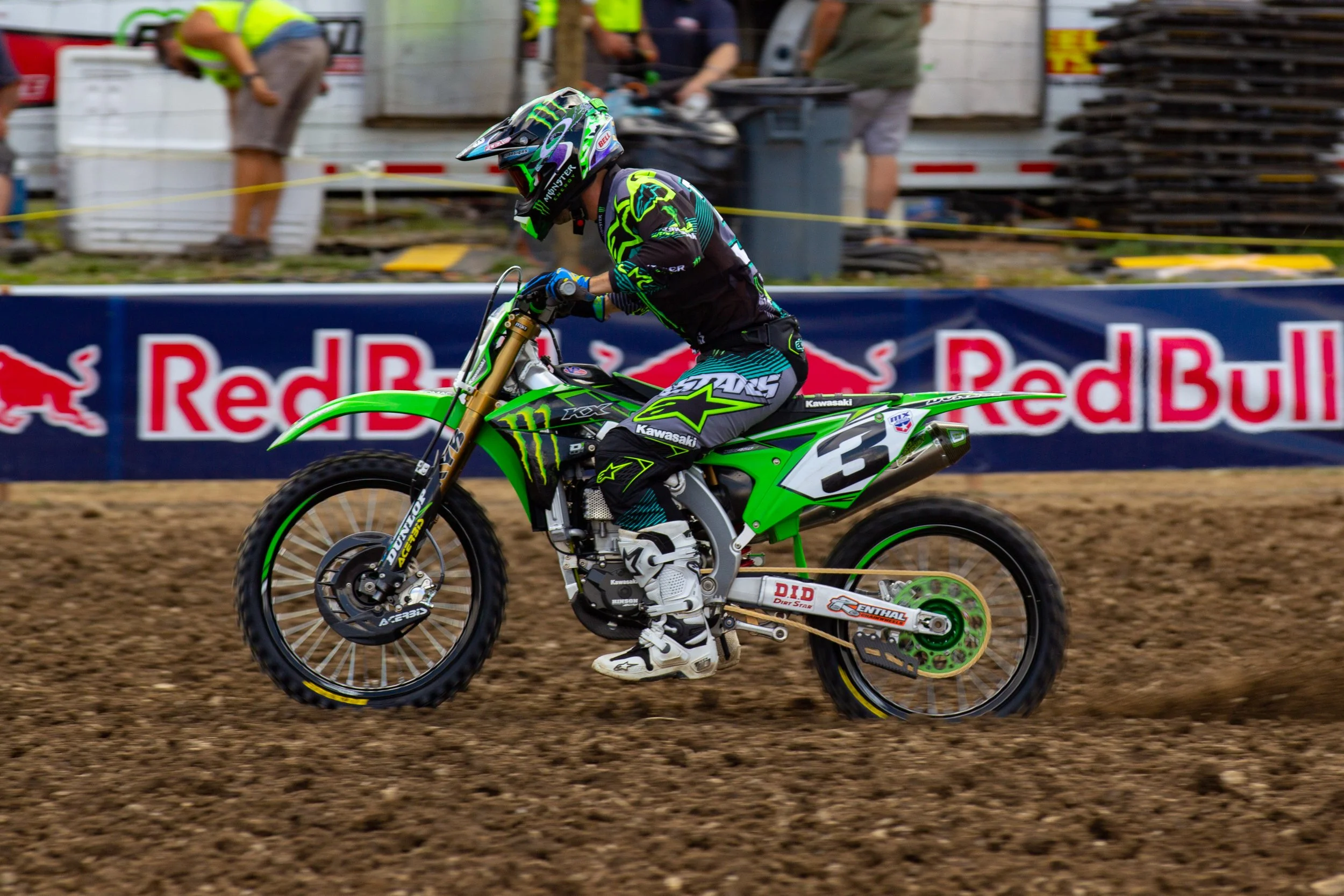
If there is one body part that separates an average rider from a confident, aggressive one, it is the hips.
Most riders think control comes from the hands. It does not. It comes from the hips.
If your feet are the anchor point then your hips are the pivot point of your entire body. When they are positioned correctly, the bike can move underneath you without throwing you off balance. When they are locked or rounded, every small movement feels big and you end up reacting instead of controlling. Can riders go fast with locked hips, yes, but this is about finding the control to gain confidence.
Let’s break down how your hips should be positioned and why it matters.
Unlocking rider initiation.
The hips need to be unlocked and rolled out, not tucked under or rounded forward. The best body movements that relate would be the foundation training hip hinge. It is not the same as a squat. The knees stay back.
When your hips are unlocked:
Your legs work independently from your upper body.
The rear of the bike can kick without throwing your shoulders down.
You maintain separation between lower and upper body.
When your hips are locked and your back is rounded:
The entire body moves as one stiff unit.
Every kick from the rear wheel transfers into your shoulders.
Causing you to instinctively grab the bars tighter.
You become reactive to how the bike moves.
Many novice and vet riders believe stiffness equals strength. In reality, stiffness makes the bike control you.
Loose, unlocked hips allow you to control the bike. It allows you to loosen the arms.
Hips Out, Chest Forward
Proper hip position while sitting means your hips are slightly rotated out, your back is straight, and your chest is directed toward where you want to go. It almost feel like you will have your chest rolled up to the sky. The key is leaning forward from the hips before the acceleration.
This is critical.
Leaning forward does not start at the shoulders. It starts at the hips. You may need to sit an inch further back and lean from the hips more forward to get the head over the handle bars. You no longer hear anybody telling you to sit up on the gas cap coming into turns. with modern bikes and the insane amount of power sitting more neutral on the seat allows for a more balanced rider.
When accelerating, the hips rotate out and the core tightens before the bike drives forward. This means:
Your body meets acceleration instead of reacting to it. It will make the acceleration feel less intense. It will allow you to be more aggressive coming out of turns. Your arms can stay loose. The force of the acceleration will b in your core and the Latissimus muscles instead of the arms. You will be anchored in by the feet especially if you keep your feet on the pegs or get them back as quick as possible.
When the hips are rotated out and you initiate the acceleration it forces you to lock in at the feet and put all the pressure into the feet. This will create more traction as you push down and back in the foot pegs. you will need to almost hover on the seat. For example if there are acceleration bumps, you will maintain more traction as your ankles flex. and in order to stay in the same spot on the seat you need to push the pressure down and back to propel you forward initiating the acceleration. The acceleration will pull you back, but you lean your head forward over the bars. You will be hovering you but over the seat and almost not feel any of the acceleration bumps as they go into your feet and the arms stay loose as you hinge and initiate at the hips.
If you wait until the bike pulls you backward, you are already late.
plain and simple the rider should initiate movement before the bike does.
The Separation Principle
Think of it this way.
Try to move quickly with a rounded back like you are hunched over your phone. Your body moves as one stiff piece.
Now stand tall, unlock your hips, and rotate them slightly back with a straight spine. Suddenly your torso and legs can move independently.
That separation is everything on a motocross bike.
With unlocked hips:
The bike can slide underneath you
You can lean with the bike instead of against it
Side to side kicks feel smaller
You stay centered over the bars
With locked hips:
A small slide feels dramatic
You brace and hold your breath
Your arms tighten
Recovery takes longer
The hips are the shock absorber between chaos and control. But lets get this straight. Once you get a kick your natural tendency will be to go back to the hunched position so changing your technique and being separated will take time to get to the point where you bodies natural reaction is to stay separated.
Hips Control Height and Bend, Not the Knees
Many riders bend excessively at the knees when standing. This collapses the body forward and shifts weight onto the front wheel.
The knees should stay relatively neutral. and stay back behind he toes. The hips are the hinge. this is what allows you to control your forward and backward head position as well as head height. If you accelerate your head goes forward. Your legs will straighten. and your height will increase. When you brake you will put your head back initiating the incoming force of the brakes. From your hips, your upper body gets more parallel to the ground and your but goes further back.
If you bend at the knees instead of hinging at the hips, your lower body weight shifts forward and your upper body pulls back to compensate, leading to arm pump. you will always be in the push pull situation causing tightness.
Correct hip placement keeps weight balanced and controlled. A more controlled rider is a more safe and confident rider. A more confident rider becomes a faster rider.
Anticipation Versus Reaction
One of the most important parts of having the right hip position is the mental elements of actively moving the body before the bike moves the body.
An object in motion stays in motion unless acted on by an external force.
If your body is already moving in the direction you want before the bike reacts to terrain in the opposite direction, you are that external force. You will minimize the bikes reaction.
For example, If you approach a rut with a hook in it and your hips are already unlocked and driving forward, you meet that force. as you accelerate through the hook you body initiates and gets the head moving forward in the direction you want to go. The hook compresses the bike and pops it back in the opposite direction. The body is already driving forward to the pop out of the hook feels minor.
If your hips are locked and rounded, you brace. The bike kicks. Your body freezes for a split second. That small movement now feels huge as the body goes with the bikes movement, which is not the direction the rider wants to go. You hold on tight in anticipation, you forget to breathe. You loose your flow.
Confident riders do not brace. They initiate. The are active in getting the bike to where they want to go.
Hip position is not just physical. It is mental readiness.
Straight Back, Tight Core
Hip position only works if the back stays straight and the core is engaged.
A rounded back:
Transfers weight to the seat and allows the force to be pulled by the arms. Makes you feel top heavy as your mobility is reduced.
A straight back:
Keeps your head over the bars. To keep the head over the bars the weight goes into the feet, creating more traction. The feet propel the rider forward reducing arm pump and arm tension. The straight back allows for lateral movements of the lower body and upper body.
When done correctly, acceleration force should feel like it is going into your feet down and back. and your upper body the lats and shoulder blades, not your forearms.
How Pros Do It
Watch riders like Cole Davis, Seth Hammaker and Hunter Lawrence.
Hips are rotated out with a straight back. Chest is pointed where they wants to go. When the bike kicks, his feet stay locked in and the hips become the pivot point. The upper body is adjusted to the direction they want to go.
It looks effortless because they do not pull on the bars.
They Actively initiate the movements before the bike does.
That is the difference.
A Drill to Feel It Immediately
Ride a few laps one handed. Standing and sitting. Not fast, controlled.
Without the second arm to hold on, your body must support acceleration from the hips and core. You will instantly feel whether you are reactive or initiating movement. You will need to lock in at the feet. You will notice you don’t squeeze the bike with your legs that much. You notice that you put all your weight on the seat instead of the feet.
It is uncomfortable at first. That is the point. You will notice everything your technique stuggles with.
Why Proper Hip Placement Creates Confidence
When your hips are positioned correctly:
The bike feels lighter
Acceleration feels smoother
Side to side movement feels manageable
Your arms stay loose
Traction improves
You feel like you are directing.
Confidence comes from stability.
Stability starts at the hips.
Final Thought
The hips are the command center of motocross body position.
Unlock them.
Roll them out.
Keep the back straight.
Engage the core.
Initiate movement.
When your hips lead, the bike follows.
And when the bike follows, you ride with confidence instead of reacting in survival mode.